Teaching young children about human body parts can be challenging—especially when traditional methods feel repetitive or boring. This is where a Body Parts Wheel becomes a powerful learning tool. Designed to turn education into play, a body parts wheel helps toddlers and preschoolers learn faster through interaction, color, and movement.
A body parts wheel for kids transforms basic lessons into an engaging experience that keeps children curious, focused, and excited to learn.
What Is a Body Parts Wheel?
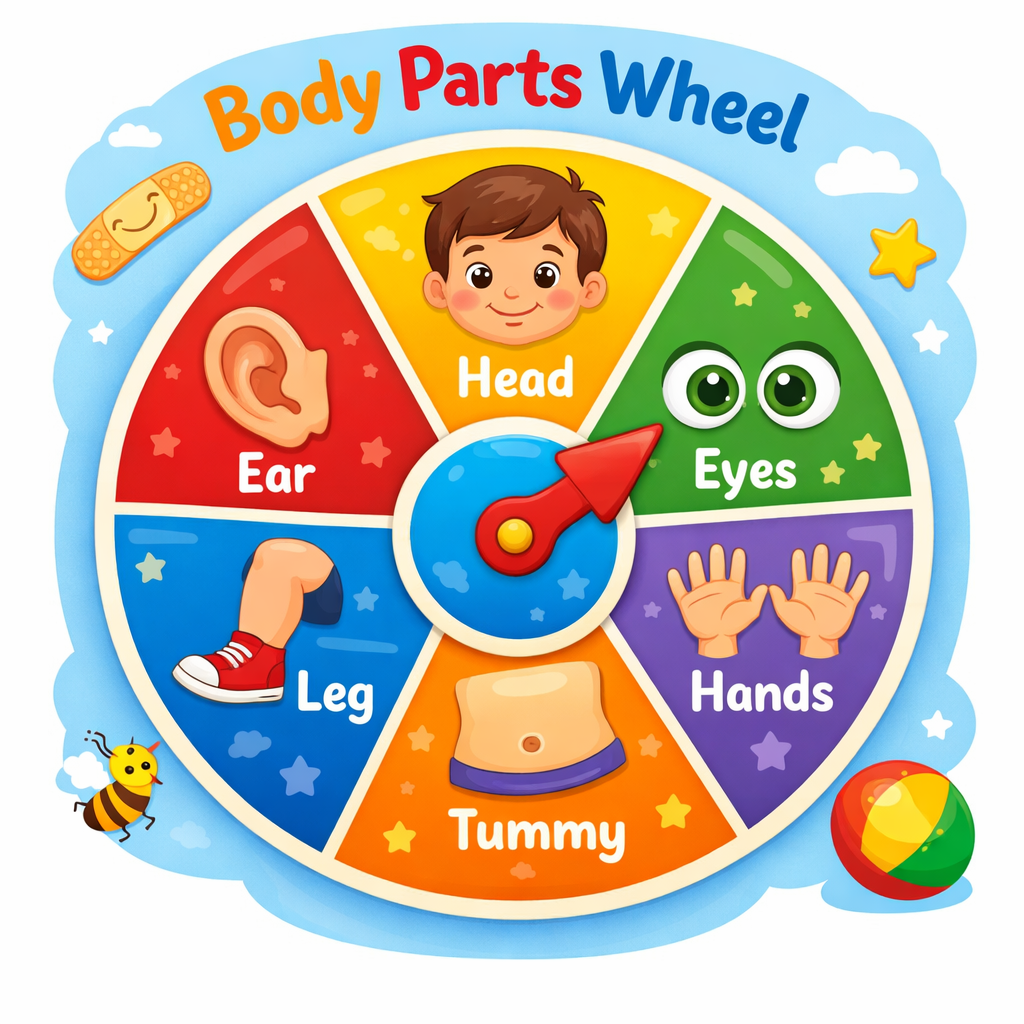
A body parts wheel is an interactive learning tool—usually circular—that displays different human body parts. Kids spin the wheel and identify the body part it lands on. This simple action adds excitement and curiosity to learning.
Unlike flashcards or worksheets, an educational body parts wheel encourages active participation, making learning feel like a game instead of a task.
Why the Body Parts Wheel Works So Well for Kids
Children learn best when multiple senses are involved. A body parts learning wheel combines visual learning, physical movement, and verbal interaction—all essential for early childhood development.
Key Benefits:
- Improves body part recognition
- Builds vocabulary naturally
- Encourages independent learning
- Strengthens memory through repetition
- Keeps screen time meaningful and limited
How to Use a Body Parts Wheel at Home or School
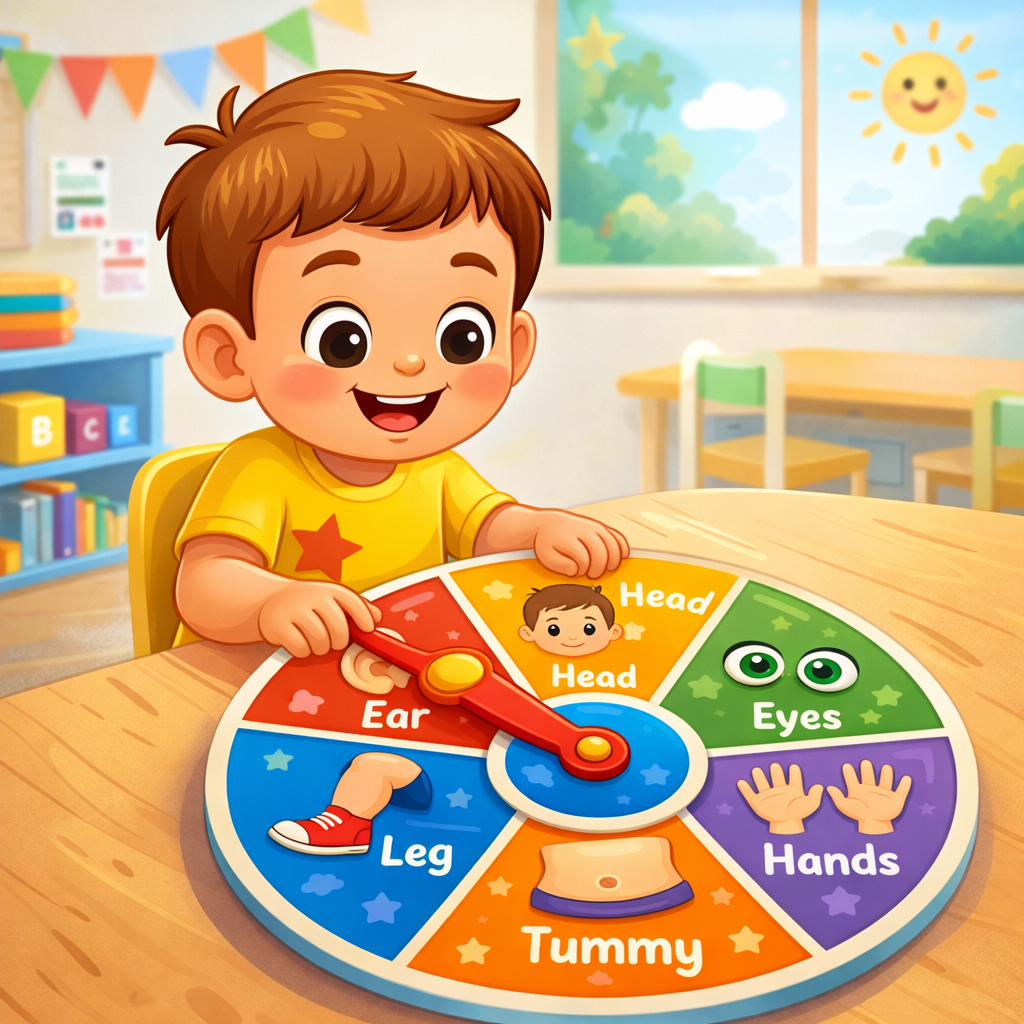
Parents and teachers can use the body parts wheel for toddlers in many creative ways:
1. Name and Point Game
Spin the wheel and ask the child to point to that body part on their own body.
2. Action Game
If the wheel lands on “hands,” ask the child to clap or wave.
3. Sound and Language Practice
Say the body part name slowly and encourage repetition to improve pronunciation.
These small activities turn learning into a joyful daily routine.
Body Parts Wheel for Toddlers vs. Preschoolers
The same wheel can be adapted based on age:
- Toddlers (2–3 years): Focus on basic parts like head, eyes, hands, legs
- Preschoolers (4–5 years): Add elbows, knees, shoulders, and simple functions
This flexibility makes the human body parts wheel for kids a long-term learning resource.
Screen-Smart Learning with Body Parts Wheels
Many parents worry about screen time. A body parts wheel activity supports balanced learning by combining digital interaction with physical movement.
When used correctly:
- Kids stay engaged, not overstimulated
- Learning remains intentional
- Parents stay involved
This makes it ideal for modern families seeking screen-smart educational tools.
Why Parents in the USA Love Interactive Learning Wheels
USA parents prefer learning tools that are:
- Simple to use
- Visually appealing
- Educational without pressure
A body parts wheel for kids fits perfectly into busy family routines while supporting early education goals.
Frequently Asked Questions (FAQs)
❓ What age is a body parts wheel suitable for?
A body parts wheel is ideal for children aged 2 to 5 years, depending on the complexity of the body parts included.
❓ Is a body parts wheel better than flashcards?
Yes. A body parts learning wheel encourages active participation, which improves focus and memory more effectively than passive flashcards.
❓ Can a body parts wheel help with speech development?
Absolutely. Repeating body part names during play helps build vocabulary and supports early speech development.
❓ Is this suitable for homeschooling?
Yes. Many homeschooling parents use a body parts wheel for toddlers as part of their daily learning activities.
❓ Does my child need supervision?
Light supervision is recommended so parents can guide pronunciation, actions, and reinforce learning.
Final Thoughts: Learning Made Joyful
A body parts wheel is more than just a learning tool—it’s a bridge between play and education. By making lessons interactive and fun, children naturally develop curiosity and confidence.
Whether you’re a parent, teacher, or caregiver, adding a body parts wheel for kids to your learning routine can make early education enjoyable, effective, and memorable.