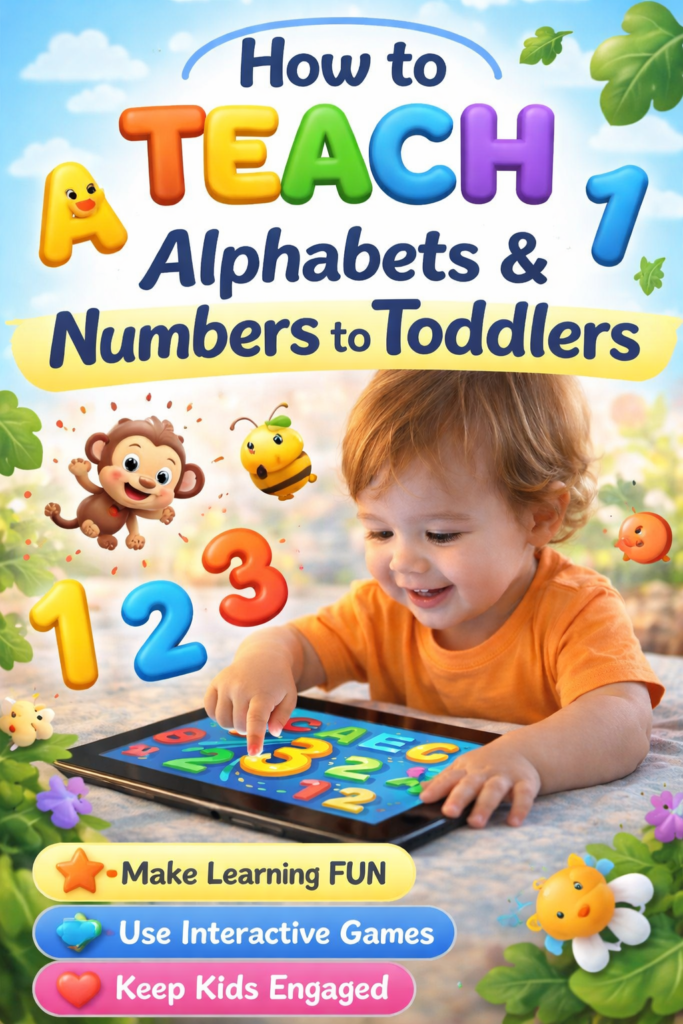
Teaching alphabets (ABC) and numbers (123) to toddlers is one of the most important early milestones—but it can also be one of the most challenging. Many parents start with the best intentions, only to find their child losing interest within minutes. The truth is simple: toddlers don’t learn best through pressure or repetition. They learn best through play, color, movement, and curiosity.
In today’s world, early childhood learning doesn’t have to be boring flashcards or forced memorization. With the right approach—and the right tools—you can turn learning into something your child actually looks forward to.
Why Traditional Teaching Methods Often Don’t Work
Many parents wonder why their toddler refuses to sit with books or alphabet charts. This isn’t a lack of intelligence—it’s biology. A toddler’s brain is naturally drawn to:
-
Bright, high-contrast colors
-
Movement and interaction
-
Instant feedback and rewards
Static learning tools like printed charts or repetitive drills often fail to stimulate these senses. When learning feels like a task instead of an experience, toddlers disengage quickly.
That’s why modern early education focuses on engagement over repetition.
The Power of Gamified Learning for Toddlers
Gamified learning means turning education into a game—where children learn without realizing they’re learning. Instead of being passive observers, toddlers become active participants.
At KidsLearnWheel, we believe learning should feel like an adventure. Interactive experiences—such as catching letters, matching numbers, or identifying objects—create emotional connections in the brain. These connections help children remember faster and longer.
How Interactive Learning Builds Strong Foundations
1. Visual and Auditory Association
When a toddler interacts with letters and numbers on a screen, they don’t just see them—they experience them. Bright visuals combined with sounds or spoken words help the brain form strong memory links.
For example, when a child catches the letter “A” and hears “A for Apple,” it reinforces recognition, pronunciation, and meaning at the same time.
2. Hand-Eye Coordination and Motor Skills
Interactive learning games encourage toddlers to move—tapping, dragging, or pointing at objects. These simple actions help develop:
-
Fine motor skills
-
Hand-eye coordination
-
Reaction timing
These skills are essential later for writing, drawing, and even sports.
A Simple Step-by-Step Learning Strategy for Parents
Here’s a practical and stress-free way to teach alphabets and numbers at home using interactive learning:
Week 1: Alphabet Discovery
Focus on letters only. Don’t worry about accuracy or scores.
-
Let your child explore freely
-
Say the letter name out loud when they interact with it
-
Celebrate every attempt
“Look! You found A for Apple!”
Week 2: Number Recognition
Introduce numbers gradually.
-
Ask your child to find a specific number
-
Count together out loud
-
Keep sessions short and fun
This helps toddlers clearly differentiate between letters and numbers.
Week 3: Object & Vocabulary Expansion
Now expand beyond ABCs and 123s.
-
Introduce animals, colors, or everyday objects
-
Encourage naming and recognition
-
Ask simple questions like “Where is the lion?”
This stage boosts vocabulary and confidence.
Screen Time Done the Right Way: Safety First
Digital learning can be powerful—but only when used responsibly. Parents should always ensure that:
-
Content is age-appropriate
-
No aggressive ads or pop-ups are present
-
The interface is clean and distraction-free
Short, guided learning sessions are far more effective than long, unsupervised screen time.
Making Learning a Joyful Journey
Early education isn’t about how fast a child memorizes the alphabet—it’s about building a love for learning. When toddlers associate learning with fun, success, and encouragement, they naturally become more curious and confident.
At KidsLearnWheel, our goal is to support parents by blending play with purpose. Thoughtfully designed interactive learning experiences can help children grow—without stress, boredom, or pressure.
So take a step away from boring flashcards. Explore playful learning, stay involved, and enjoy watching your toddler learn with joy.
Tip for Parents: Consistency matters more than perfection. Even 10–15 minutes of joyful learning a day can make a big difference over time.